

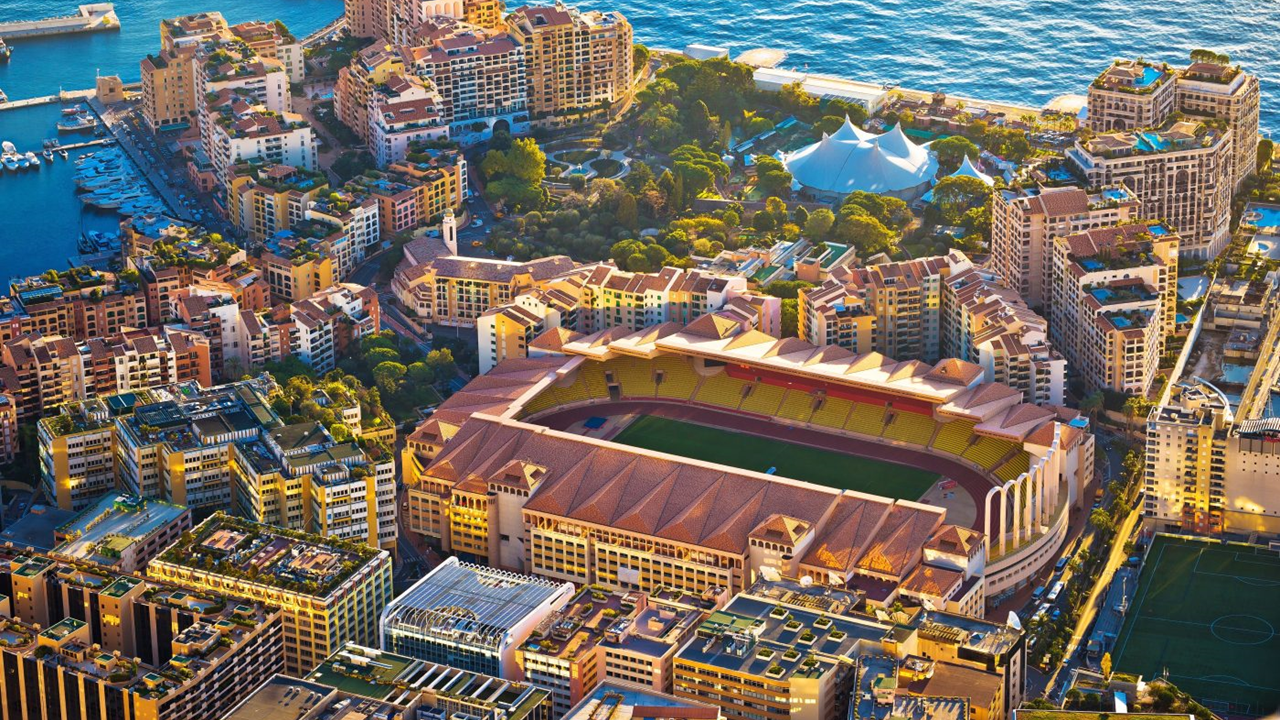
Welcome to Monaco – a tiny, glamorous principality on the French Riviera, famous for its superyachts, luxury penthouses, and breathtaking coastal views. But nestled among all this wealth and prestige sits AS Monaco, a football club with a history as rich as its surroundings. With eight Ligue 1 titles and a Champions League final appearance, AS Monaco has earnt its place among Europe’s elite. Not to mention, it’s been a breeding ground for world-class talent like Thierry Henry and Kylian Mbappé.
This is the story of how AS Monaco shaped the footballing world.
Humble beginnings: the birth of AS Monaco
Founded in 1924, AS Monaco came to life through the unification of several local clubs in France and the principality. Initially competing in amateur divisions, it didn’t take long for the club to rise through the ranks of French football.
Despite being based outside of France, Monaco was granted a spot in the French league system – and they weren’t about to let their small size hold them back. In 1933, they were invited by the French Football Association to turn professional. Their first year didn’t go to plan, ending in relegation, but by 1948, Monaco had regained professional status and returned to the second division. Steady performances saw them promoted to the top flight in 1953 – laying the foundations for future success.
Golden era: the 1960s boom
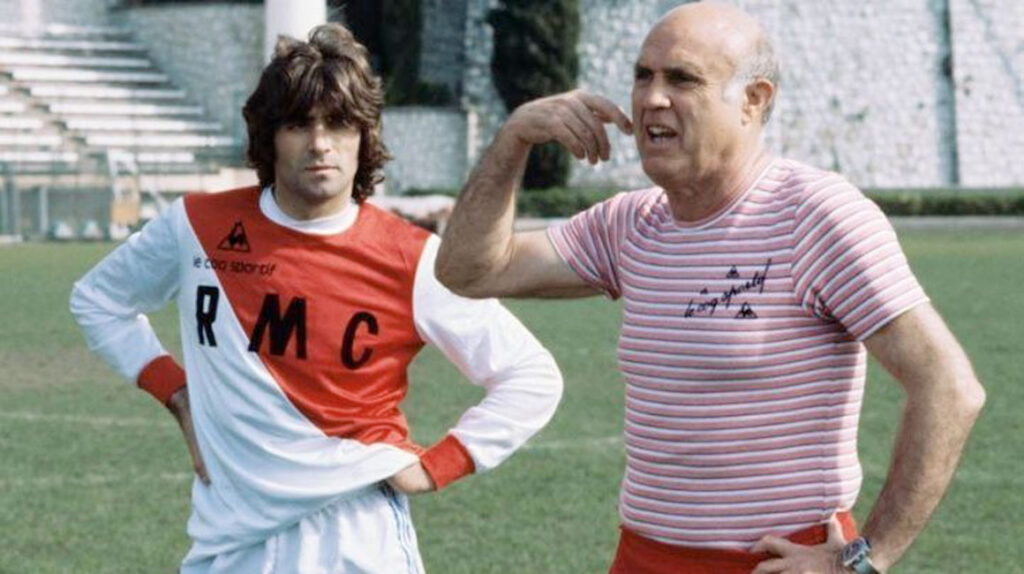
The 1960s saw AS Monaco make their mark. Under the legendary Lucien Leduc, the club won its first major trophy – the Coupe de France – in 1960. A year later, they secured their first Ligue 1 title and earned a spot in the European Cup, marking their arrival as serious contenders.
The peak of this golden era came in 1963 when Monaco completed a historic league and cup double. However, Leduc’s departure that same year sparked a period of instability, with the club bouncing between the first and second divisions throughout the following decade. When Leduc returned in 1976, he guided Monaco back to the top tier and, in 1978, delivered another Ligue 1 title. Success followed into the early 80s, with another league triumph in 1982 – but European glory remained elusive, as the club struggled to make an impact on the continental stage.
Source: https://www.asmonaco.com/
The Wenger years: a new era of football in Monaco
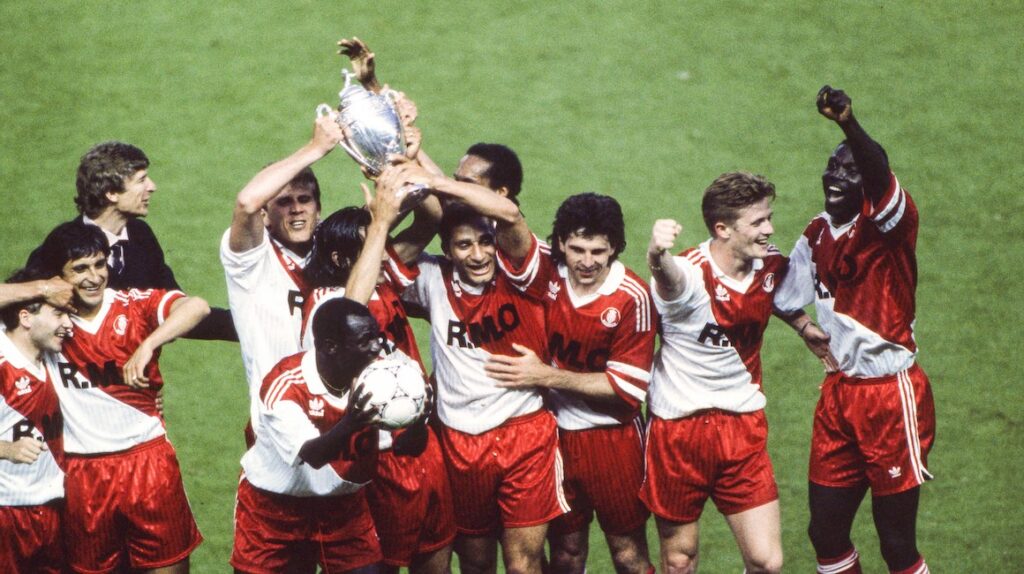
One of the most defining periods in AS Monaco’s history came in 1987 when a relatively unknown Arsène Wenger took charge. His philosophy? Attacking football and youth development. A mix of experienced stars like George Weah, Glenn Hoddle, and Jürgen Klinsmann were signed to play alongside future World Cup winners Lilian Thuram, Emmanuel Petit, and Thierry Henry.
Wenger’s impact was immediate – winning the league in his debut season (1988) and the Coupe de France in 1991. Monaco also became a force in Europe, consistently competing in the latter stages of the European Cup before reaching the Champions League semi-finals in 1994 where they would lose to eventual winners Milian.
Source: https://www.asmonaco.com/
As a result of his success, Wenger was sought after by Bayern Munich that summer. The Monaco board refused to let him leave and tensions began to flare. Wenger was dismissed just a few months later after a poor start to the 1994/95 season. The rest, as they say, is history – as he went on to revolutionise English football at Arsenal.
Financial woes and a European dream in the 2000s
After Wenger’s departure the club recorded two further league championships in 1997 and 2000. However, financial struggles soon overshadowed their on-field achievements. By 2003, the club found itself €50 million in debt and was relegated to Ligue 2 – only for the decision to be overturned on appeal.
With a transfer ban imposed on them, AS Monaco defied the odds in 2004. Managed by Didier Deschamps, they pulled off a stunning Champions League run, knocking out giants like Real Madrid and Chelsea before falling to Porto in the final.
But the club’s money troubles persisted, and it wasn’t until 2011 – when Russian billionaire Dmitry Rybolovlev took over – that things began to stabilise. Claudio Ranieri was appointed as manager and immediately gained promotion back to Ligue 1. With Rybolovlev’s backing, Monaco splashed the cash, signing superstars like Radamel Falcao and James Rodríguez.
Big spending and a return to glory
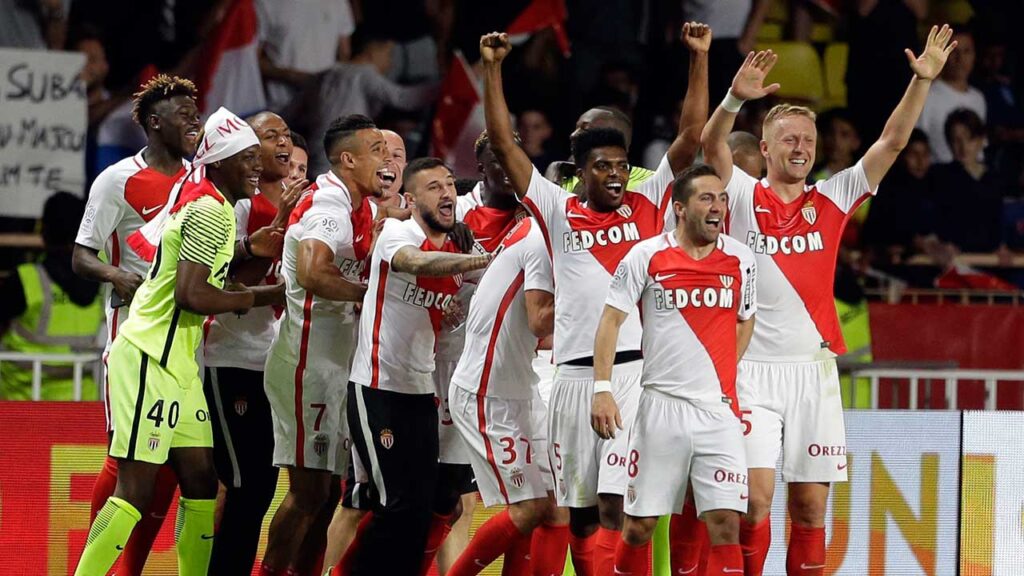
The investment paid off in 2017 when Monaco won Ligue 1, their first in 17 years. The team was powered by a young Kylian Mbappé and a free-scoring Falcao, with 26 and 30 goals respectively. However, that summer saw an exodus of talent. Mbappe was loaned to PSG with an obligation to buy for €180m, the second highest transfer fee in history. Teammates Bernardo Silva and Benjamin Mendy were sold to Manchester City, and Tiémoué Bakayoko was sold to Chelsea.
Source: https://www.sportsnet.ca/
Despite losing a host of high profile players, Monaco managed to finish second in the following season, 13 points behind league winners PSG. Since then, the club has struggled to maintain consistency. In 2023, the club appointed Adi Hütter. In his first season he guided the club to a runner-up finish, and qualification to the Champions League group stage for the first time since 2018.
A lasting legacy and influence on French football
AS Monaco is unlike any other club in French football. Thanks to the principality’s tax advantages, they can offer players higher net salaries, making them a prime destination for young talent. But there’s a catch – players rarely stay long, with Europe’s biggest clubs swooping in as soon as they hit their peak.
Monaco thrives on being different. It doesn’t have the deep-rooted tribalism of other French clubs, nor the global commercial appeal of PSG. Yet it remains a highly respected institution, admired for its ability to develop world-class talent and consistently punch above its weight.
In an era where football is dominated by globalisation and mega-clubs, AS Monaco is a fascinating anomaly – a small club with a mighty legacy. Whatever the future holds, one thing is certain: Monaco’s impact on the footballing world is here to stay.
Shop our football collection
Celebrate the best moments in football with our exclusive collection of t-shirts. From legendary celebrations to cult heroes, The Terrace Apparel lets you wear the moment.
All our products are made from high-quality materials that are both comfortable and long-lasting. Our embroidered designs are carefully crafted using the latest techniques and highest quality materials to ensure that they remain durable and eye-catching, even after multiple washes.